3D Slope Stability Analysis of an Open Pit Mine Failure
Project: Open pit mine failure
Location: Round Hill
Method: 3D limit equilibrium analysis
Key result: 3D factor of safety significantly higher than 2D
Focus: Fault-controlled failure geometry and mine design implications
Site Background
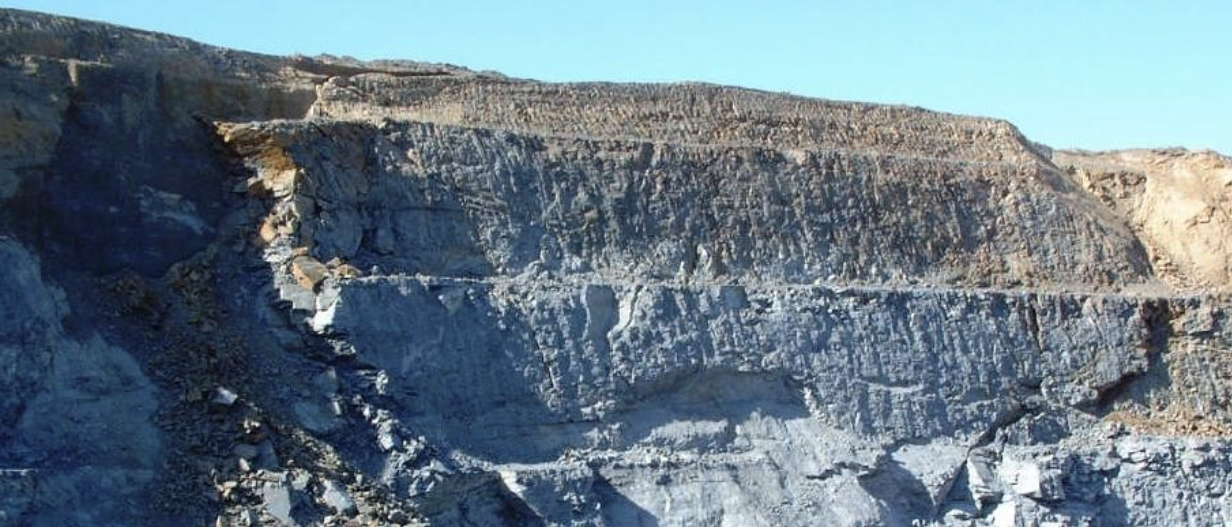
A slope failure occurred at the Round Hill open pit mine, where geological structure played a major role in controlling the shape and extent of failure. Because the event was well documented, it provides a practical case for comparing 2D and 3D slope stability analysis.
Geological Controls on Failure
The failure surface was strongly influenced by faulting and discontinuities within the rock mass. These structures controlled the geometry of the slope failure and needed to be represented accurately to understand the true stability conditions.
3D Slope Stability Modelling Approach
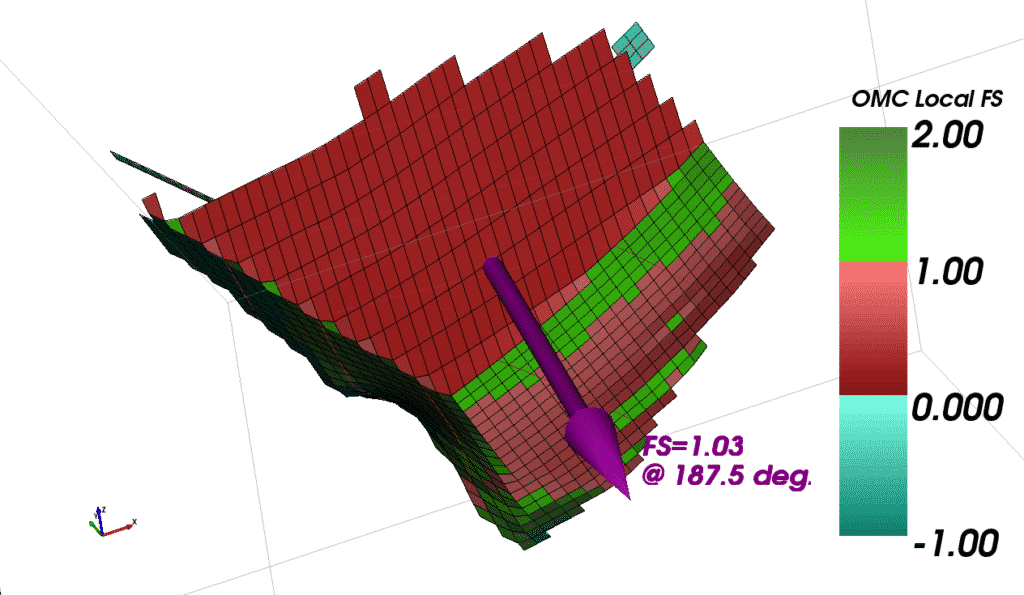
The failure surface was modelled in three dimensions using TSLOPE so that the actual fault-controlled geometry could be analysed directly. This allowed the slope boundaries, structural controls, and confinement effects to be represented more realistically than a single 2D section.
3D vs 2D Results
The 3D analysis produced a significantly higher factor of safety than the equivalent 2D analysis. This difference reflects the influence of three-dimensional confinement and highlights the risk of relying only on 2D back analysis when open pit failures are structurally controlled.
For mine design, this matters because 2D interpretation can misrepresent stability in complex conditions and lead to misleading assumptions about material strength or slope performance.
Key Takeaways
- 3D slope stability analysis can produce materially different results to 2D methods
- Fault-controlled failures require accurate 3D geometry
- 2D back analysis may misrepresent stability in complex conditions
- 3D modelling provides better insight for mine design decisions