Geotechnical Insights

Technical papers on 2D and 3D slope stability analysis

Explore technical papers, case studies, and practical examples covering limit equilibrium methods, 3D slope stability analysis, seismic assessment, geological modelling, and TSLOPE applications.

Engineering judgement, not just output

These papers look beyond headline factor of safety values and focus on how slope stability models are built, interpreted, tested, and applied in real geotechnical settings.

Topics covered

  • 3D limit equilibrium analysis
  • Seismic slope stability
  • Back-analysis of slope failures
  • Geological and terrain modelling

Technical papers

Read the papers below for deeper technical discussion, worked examples, and practical applications of TSLOPE in civil, mining, and seismic slope stability problems.

Seismic analysis

The use of 3D LE methods to calculate slope stability during strong earthquake shaking

By Ian Brown and Peter Wood.

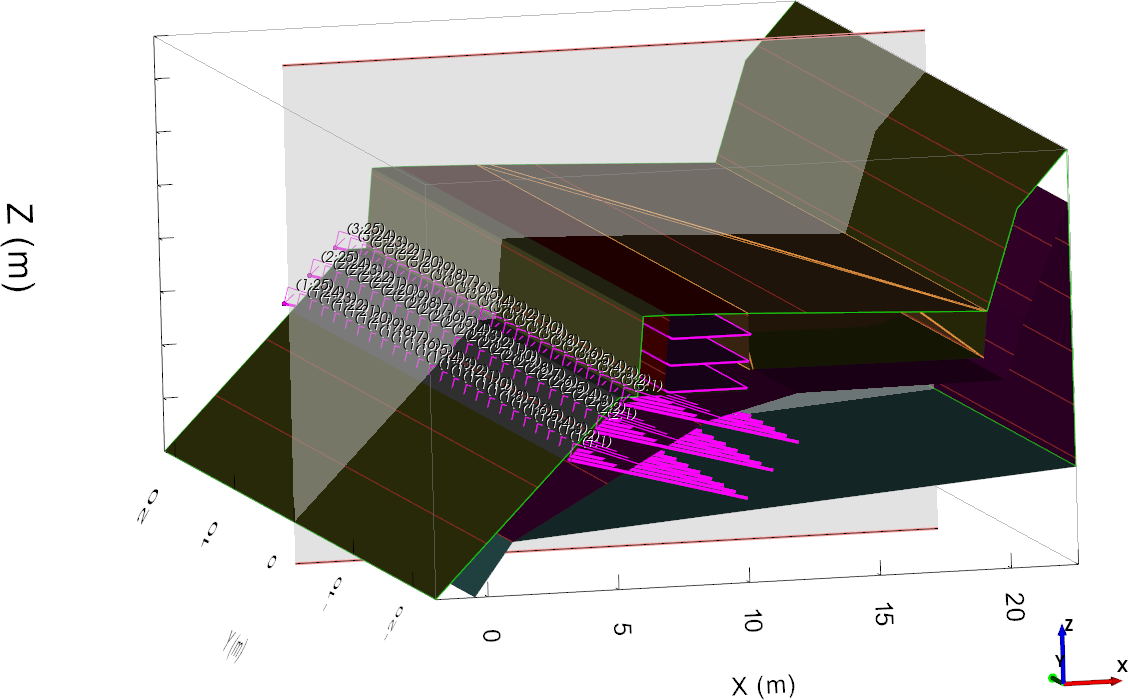
This paper discusses the application of three-dimensional limit equilibrium analysis for slope stability, with a focus on seismic considerations. A case study of the Waiau tank farm following the 2016 Kaikoura earthquake illustrates the practical application of 3D analysis and compares results from 2D and 3D analyses.
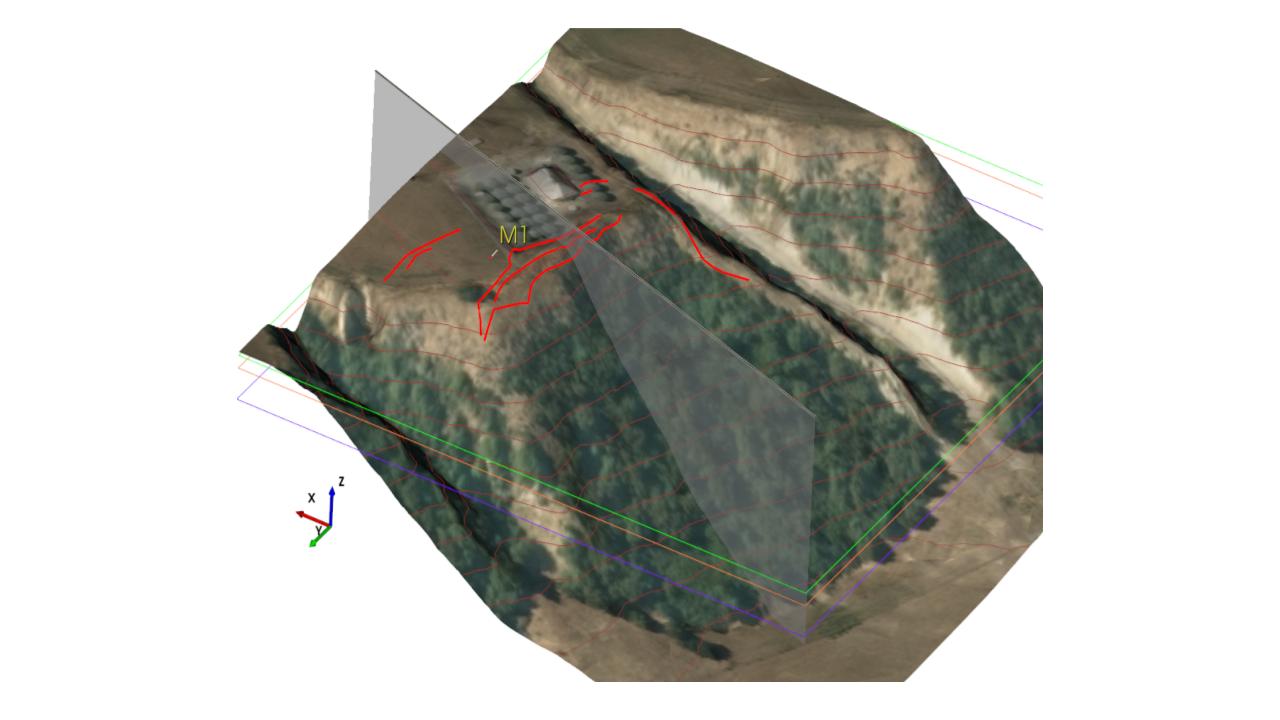
TSLOPE Waiau tank farm
3D methods

The case for using three-dimensional limit equilibrium stability analysis

By Ian Brown and Peter Wood.

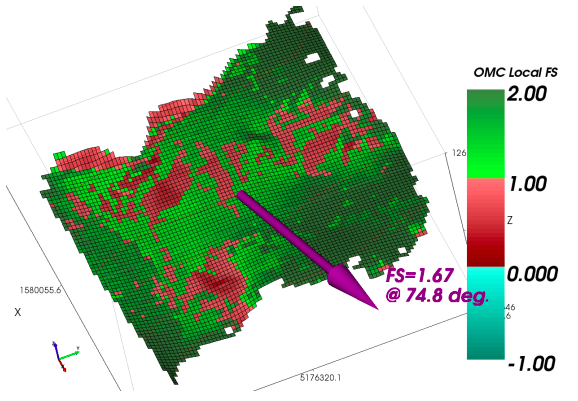
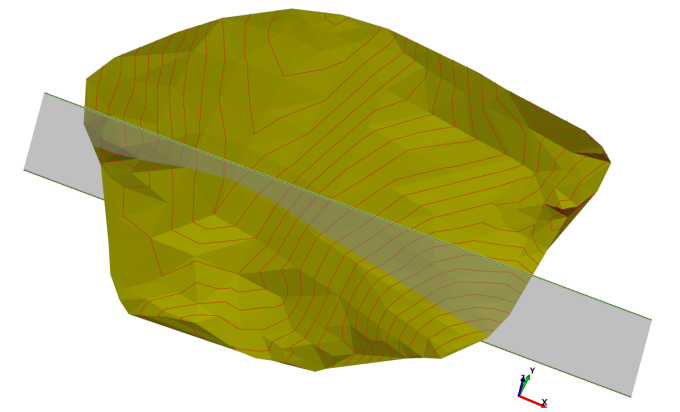
This paper explains how TSLOPE provides reliable 3D analysis for slopes in complex geology, discusses background theory, and compares 2D and 3D analyses on the same geological model.

3D limit equilibrium model
Seismic hazard

Slope stability analysis and the new New Zealand National Seismic Hazard Model

By Ian Brown.

The new National Seismic Hazard Model indicates shaking levels that challenge site stability assessments in 2D analyses. This paper shows how 3D effects provide additional resisting forces that demonstrate stability in cases where 2D analyses suggest instability.

Slope stability and NSHM
Earthquake modelling

Development of 3D models of slope failure during Canterbury earthquake sequence

By C J Skinner and I R Brown.

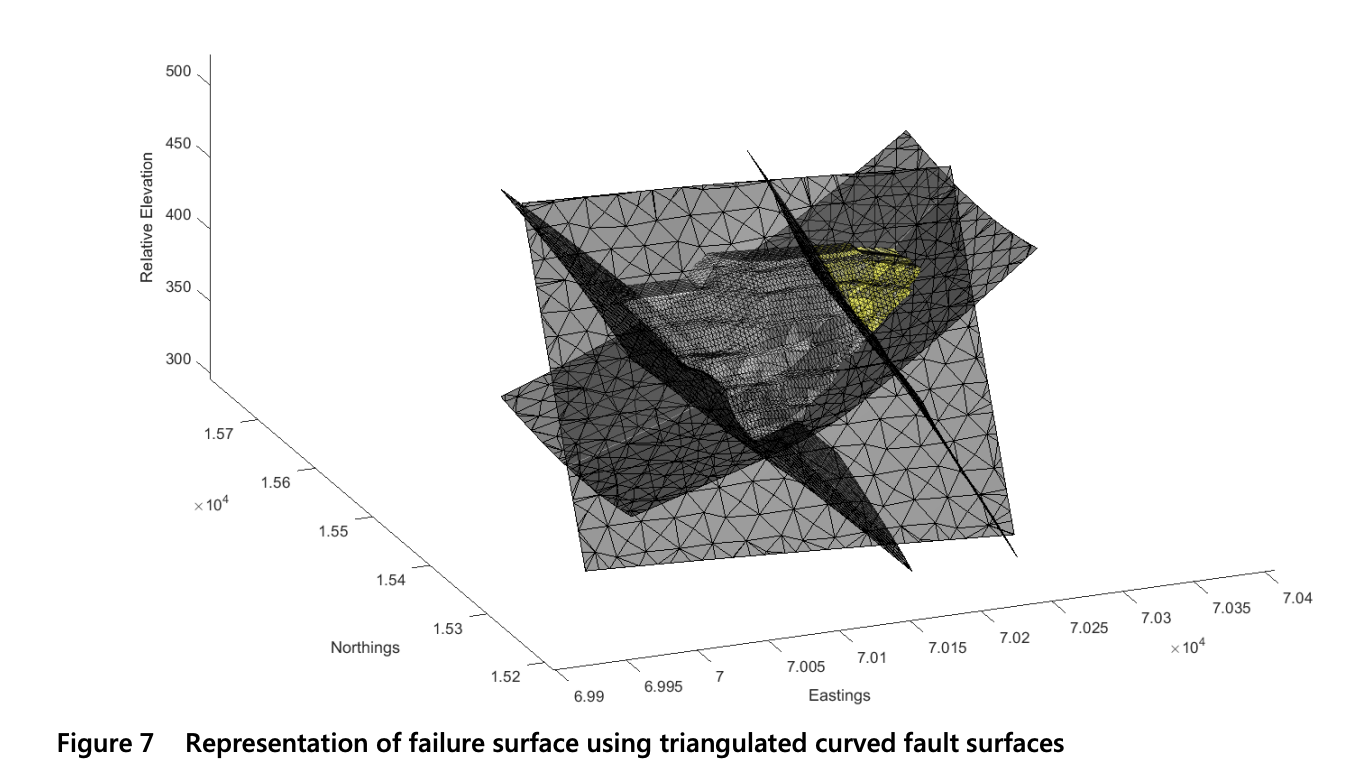
This paper describes the development of 3D models of documented landslides using Leapfrog3D and TSLOPE, with the goal of calibrating computational methods and providing research models for seismic displacement prediction.

Canterbury earthquake models
Worked example

TSLOPE: how to analyse a slope for noncritical slip surfaces

By Ian Brown.

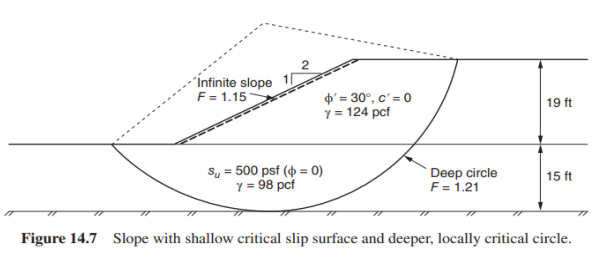
This example illustrates how to locate critical slip surfaces using search methodology, and compares results between 2D and 3D analysis of the same slope. Adapted from Duncan et al. 2014.

TSLOPE critical slip surfaces
Mining

Estimation of in situ strength from back-analysis of pit slope failure

By Ian Brown, Peter Wood and Mark Elmouttie.

Presented at the First Asia Pacific Slope Stability in Mining Conference in 2016, this paper compares 2D and 3D analyses of pit slope failures. Results show that shear strength parameters vary when back-calculated using 3D analyses, providing better inputs for forward design and more efficient pit slopes.

Open pit slope example
Civil application

3D terrain and geological modelling for the design of a cut slope in Wellington, NZ

By Matt Brown.

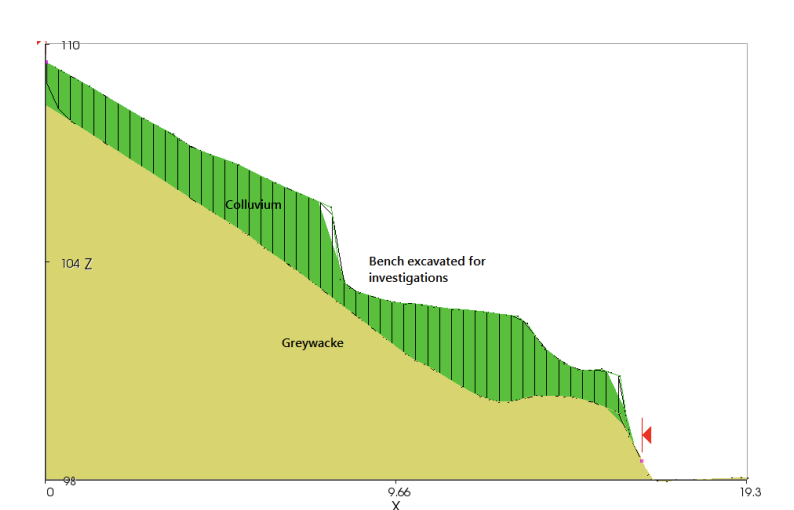
A 3D terrain and geological model was built for a proposed house site in Wadestown, Wellington, using site data, topographical survey, and UAV photogrammetry. Analysis in TSLOPE provided parameters for reinforcement design, demonstrating practical small-scale application of 3D methods.

Cross-section showing slope failure controlled by greywacke colluvium contact
Limit equilibrium

On the Limitations of Limit Equilibrium Slope Stability Analyses

By Robert Pyke Ph.D., G.E.

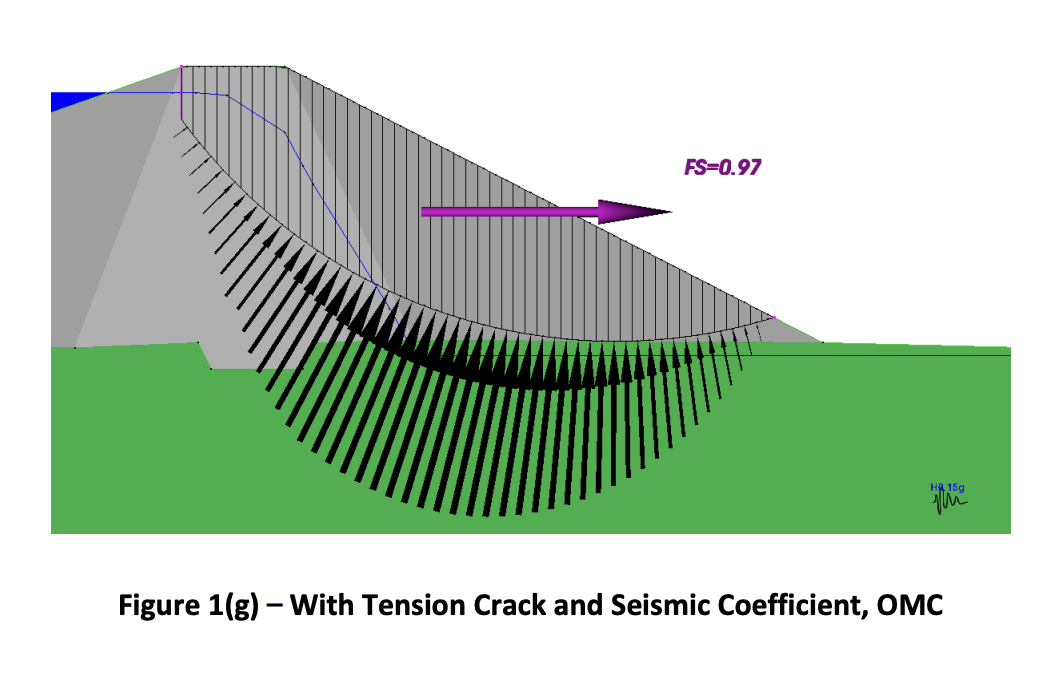
This paper discusses the history, use, and limitations of limit equilibrium slope stability analyses. It highlights why computer programs should not be treated as automatic sources of correct answers, and why engineering judgement remains essential when interpreting simplified analytical methods.

Limit equilibrium analysis with tension crack and seismic coefficient